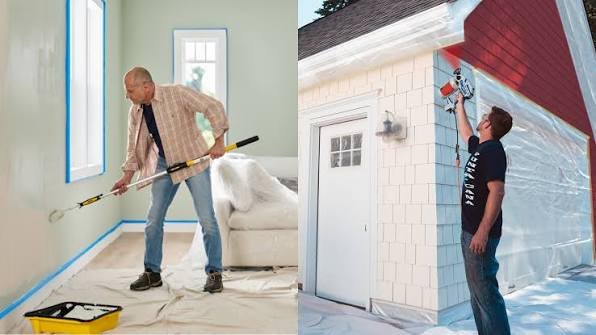
I once watched a neighbor try to save money by using leftover interior paint on an exterior wall. Within a year, it was peeling and faded badly. The interior vs exterior paint difference isn’t just marketing — it’s genuinely about chemistry and durability suited to very different conditions.
Why Interior and Exterior Paint Aren’t Interchangeable
Quick answer: Interior and exterior paint use different resins and additives — exterior paint is formulated to resist UV rays, temperature swings, and moisture, while interior paint prioritizes low odor, washability, and a smoother finish for indoor conditions.
Using one in place of the other might look fine initially, but the long-term results tell a different story.
1. Exposure to Weather Conditions
Exterior paint has to survive rain, direct sunlight, temperature fluctuations, and pollution. It contains additives specifically designed to resist UV degradation and moisture penetration — things interior paint simply doesn’t need to handle.
2. Flexibility and Expansion
- Exterior surfaces expand and contract with temperature changes throughout the day and across seasons
- Exterior paint is formulated with more flexible resins to handle this movement without cracking
- Interior paint, applied outside, cracks and peels much faster because it lacks this flexibility
3. VOC Levels and Odor
Interior paints are generally formulated with lower VOC (volatile organic compound) levels since they’re used in enclosed, occupied spaces. Exterior paints can have higher VOC content since they’re used outdoors with natural ventilation, though low-VOC exterior options exist too.
4. Finish and Washability
Interior paint is designed for a smoother, more washable finish, since indoor walls get touched, bumped, and occasionally need spot-cleaning. Exterior paint prioritizes weather resistance over this kind of washability.
5. Mold and Mildew Resistance
Quick answer: Exterior paint typically contains stronger mold and mildew-resistant additives than interior paint, since outdoor surfaces face constant exposure to moisture, humidity, and organic growth conditions that indoor walls rarely encounter.
This matters especially in humid climates or homes near coastal areas, where exterior surfaces face near-constant moisture exposure.
Can You Use Exterior Paint Indoors?
Technically possible, but not recommended. Exterior paint often has higher VOC levels unsuitable for enclosed spaces, and the finish tends to be less smooth than what most people want for interior walls.
- Higher VOC content can cause stronger, longer-lasting odors indoors
- Finish often looks rougher than dedicated interior paint
- No real benefit — you’re paying for weather-resistance properties you don’t need indoors
Can You Use Interior Paint Outdoors?
This is the more common (and more damaging) mistake. Interior paint used outdoors will fade, crack, and peel significantly faster because it lacks UV protection and flexible resins needed to handle weather exposure.
Choosing the Right Type for Specific Areas
- Covered porches or semi-outdoor spaces: exterior paint is still the safer choice due to humidity and temperature exposure
- Garages: interior paint generally works fine since they’re enclosed, though exterior-grade paint offers extra durability if the garage isn’t fully sealed
- Basements: interior paint with moisture-resistant additives, given below-ground humidity concerns
Cost Differences
Exterior paint typically costs slightly more per liter than interior paint due to the additional weather-resistant additives and UV protection built into the formula. That said, it’s not worth cutting corners here — the cost difference is minor compared to the cost of repainting prematurely.
FAQs
Q: What happens if I use interior paint outside? It will fade, crack, and peel significantly faster than proper exterior paint, usually within a year or two depending on weather exposure.
Q: Is exterior paint safe to use indoors? It’s usable but not ideal due to higher VOC content and a less smooth finish compared to interior-specific paint.
Q: Does exterior paint last longer than interior paint? In its intended outdoor environment, yes — but that’s because it’s specifically formulated for those harsher conditions.
Q: Can I mix interior and exterior paint? No, this isn’t recommended. Mixing can compromise the specific properties each type is formulated to provide.
Q: How often should exterior paint be reapplied? Typically every 5-10 years, depending on climate exposure, sun intensity, and paint quality used.
Conclusion
The interior vs exterior paint distinction genuinely matters for durability and appearance over time. Using the right type for the right surface saves you money and repainting headaches down the line — a lesson my neighbor learned the hard way.
Suggested Alt Text:
- “Exterior house wall being painted with weather-resistant paint”
- “Interior living room wall freshly painted with low-VOC paint”
- “Peeling exterior paint showing signs of wrong paint type used”